Get ready to visit the Uffizi Gallery museum and palace
Behind their walls, these buildings conceal far more secrets than meet the eye. The mysteries, curiosities and anecdotes multiply when we talk about buildings steeped in history such as the Uffizi Gallery, one of the most important buildings in Florence and indeed in the whole of Italy. If you’re planning to buy tickets for the Uffizi Gallery and want to know what mysteries and curiosities it holds, we’ll tell you all about them!
Behind their walls, these buildings conceal far more secrets than meet the eye. The mysteries, curiosities and anecdotes multiply when we talk about buildings steeped in history such as the Uffizi Gallery, one of Florence’s most important buildings and throughout Italy. If you’re planning to buy Tickets for the Uffizi Gallery and if you’d like to know what mysteries and curiosities it holds, we’ll tell you all about them!
History and interesting facts about the Uffizi Gallery
Why is it called the Uffizi? The origins of the Gallery
To understand the history of the Uffizi Gallery, we must go back to the 16th century, when Cosimo I de’ Medici, Grand Duke of Tuscany, commissioned the architect Giorgio Vasari to construct a building that would bring together the administrative offices (“uffizi” in Italian) of the Florentine government. This is where the building’s name comes from: uffizi means ‘offices’ or ‘trades’.
The project began in 1560 and had a clear political purpose: demonstrating the centralised power of the Grand Duchy of Tuscany under the control of the Medici family. The U-shaped building extends from the Piazza della Signoria up to the River Arno. The original design included two parallel wings connected by a gallery on the top floor, and this is precisely where a completely different story would begin.
Francesco I de’ Medici and the founding of the gallery
The transformation of this administrative building into a museum began thanks to Francesco I de’ Medici, son of Cosimo I and a great lover of the arts and sciences. Francesco decided to turn the top floor of the building into his own private gallery, where he would bring together his extraordinary collection of works of art.
This private gallery was decorated with Roman statues, family portraits, paintings by the great masters of the Renaissance and items that showcased the Medici family’s refined taste. It was a personal collection, yes, but also a way of demonstrating the cultural and aesthetic power of one of the most influential families in Europe.
We could say that it was this initiative that gave rise to what we now know as the modern museum. Long before public art institutions existed, the Uffizi was already functioning as an exhibition space, albeit one reserved for a privileged few.
From private collection to public museum
But when did it go from being a private collection to a museum? Following the death of the family’s last direct heiress, Anna Maria Luisa de’ Medici, the Family Pact in 1737. This agreement stipulated that the Medici’s works of art could not be removed from Florence. Thanks to this insight, the city still preserves an unrivalled artistic heritage to this day and the Uffizi Gallery was able to continue its expansion as a museum.
Over time, collections have been added, spaces restored and the works organised chronologically and thematically. Today, a tour of the exhibition galleries is a journey from the From the Middle Ages to the Baroque period, with unmissable stops in front of various masterpieces from the history of art.
The Vasari Corridor: a secret passageway steeped in centuries of history
One of the most surprising features of the Uffizi is the Vasari Corridor, an elevated, enclosed walkway that connects the Uffizi Gallery with the Palazzo Pitti, passing through the Ponte Vecchio.
This passage was also designed by Vasari in 1565, to mark the marriage of Francesco I de’ Medici and Joanna of Habsburg. The reason? To allow the Medici to move between their residences without mingling with the people. Surprised?
The Corridor has also been used to house collections of artists’ self-portraits over the centuries. Although It has been closed for 8 years for restoration work, has now reopened to the public, and exploring it today is an experience you shouldn’t miss.
Italy’s most visited museum
The latest figures from the Italian Ministry of Culture (2024, published in 2025) show how The Uffizi Gallery is Italy’s most visited state museum. Of all the monuments, this is the only one to rank behind the Colosseum Archaeological Park, making it the first museum on this list, followed by its neighbour, the Accademia Gallery. Art takes centre stage in Florence!
Fascinating facts about the Uffizi Gallery that will surprise you
As well as its history and masterpieces, the Uffizi Gallery is full of details and anecdotes that make it even more special:
- Europe’s oldest museum: although the Louvre often steals the limelight, the Uffizi was already operating as an art gallery in the 16th century, which earns it the title of one of the the world’s first museums in its modern conception.
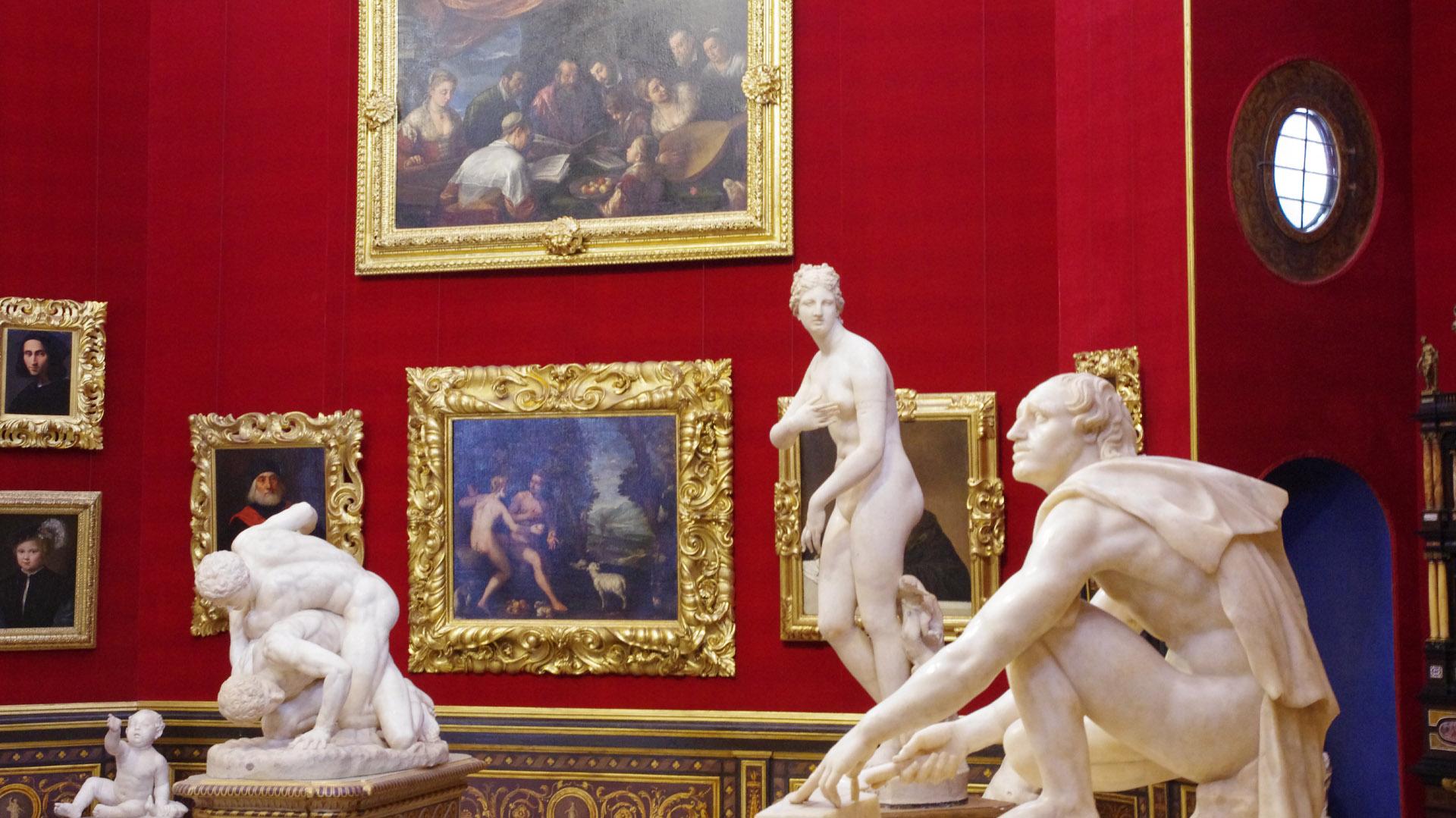
- The Uffizi’s ‘Tribuna’: an octagonal room decorated with semi-precious stones, mirrors, marble and paintings, designed by Bernardo Buontalenti. It was the heart of Francis I’s collection and is considered one of the oldest exhibition spaces in Europe.
- The painted ceilings: many of the galleries are adorned with frescoes and decorations that often go unnoticed amidst the grandeur of the artworks. Don’t forget to look up as you wander through the corridors.
- The Hidden Uffizi: beneath the museum, in the less visible areas, there are storage facilities and state-of-the-art restoration laboratories. Although they are not normally open to the public, they are an essential part of the museum’s work.
An experience that goes beyond art
The Uffizi Gallery is more than just a museum; it is the legacy of one of Europe’s most important families. If you’re planning a visit to Florence, don’t miss the chance to explore this unique place. If you’d like a more in-depth and personalised experience, we’d be delighted to accompany you.
More articles to plan your trip
View all articles →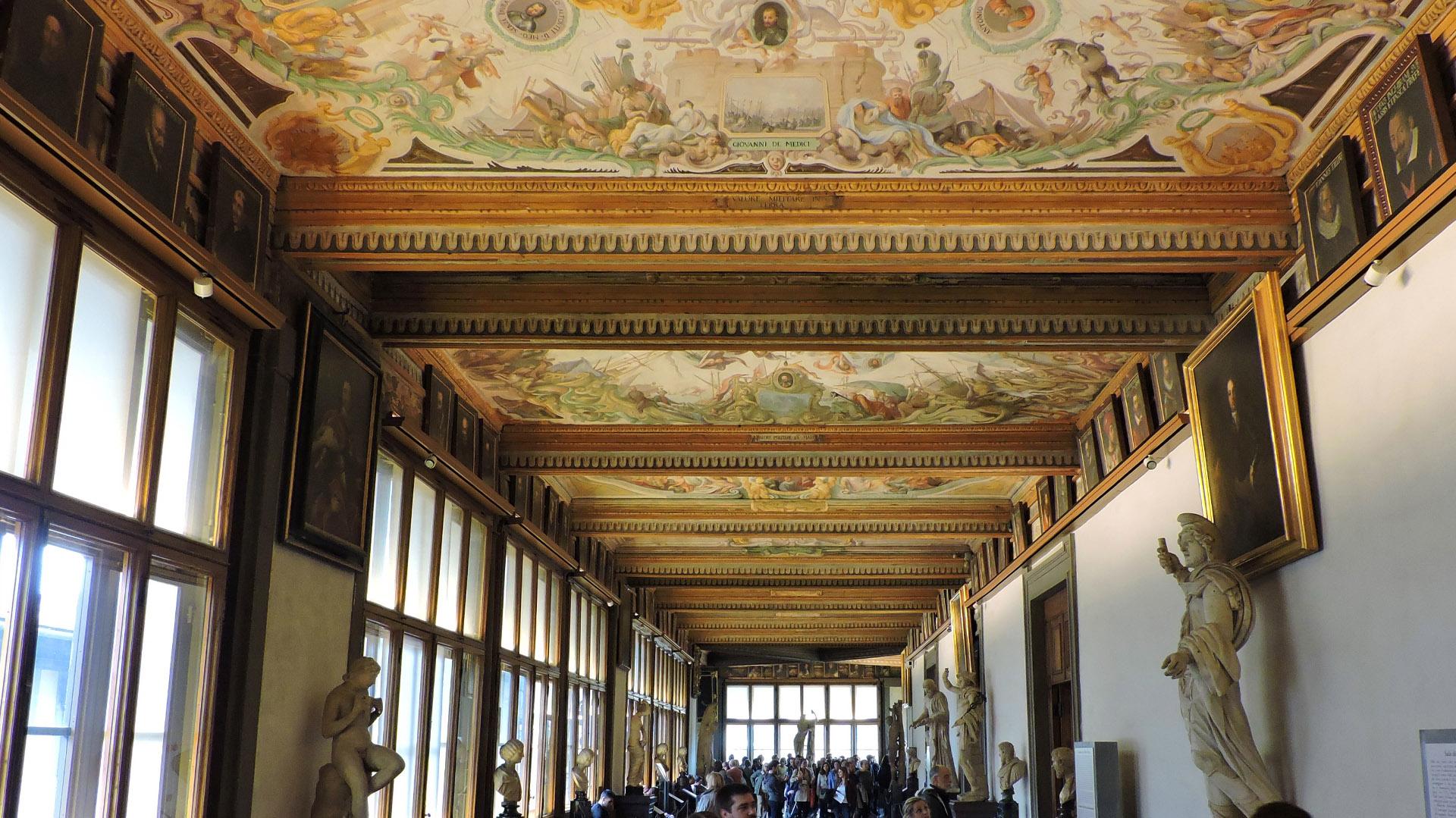
Frequently Asked Questions
How and when will I receive my tickets?
Once you’ve completed your purchase, you’ll receive a confirmation email with the details of your booking. Tickets will be sent by email up to 24 hours before your visit or, if you book less than 24 hours in advance, up to 1 hour beforehand. For guided tours, tickets may be collected directly at the meeting point. If you book a combined experience, you may receive tickets for each attraction separately and at different times.
What documents do I need?
All visitors must present an original and valid identity document. The details must match those provided at the time of booking, as tickets are issued in the visitor’s name. Photocopies or digital copies of the document are not accepted. Minors must also carry their own identification and be accompanied by an adult.
Can I cancel my booking?
No. Once you’ve made your booking request, it’s not possible to change the name, date or time, nor to cancel the tickets. Nor are returns or refunds permitted for personal, medical, work-related or travel cancellation reasons. These terms and conditions are displayed during the purchase process and must be accepted before finalising the booking. The only exception is if the monument is closed. In that case, you will automatically receive a 100 per cent refund of the ticket price via the same payment method used for the purchase.
What famous works can I see at the Uffizi Gallery in Florence?
Among the most important works in the Uffizi Gallery are Botticelli’s *The Birth of Venus* and *Spring*, Leonardo da Vinci’s *The Annunciation* and Michelangelo’s *Tondo Doni*. The museum also houses paintings by Raphael, Titian and Caravaggio, which take you on a journey through different periods of Italian art history.